

The Client for NFS (Network File System) in Windows 11 is a feature that allows Windows systems to access files on Unix-based or Linux-based NFS servers as if they were local files. NFS is a network file-sharing protocol commonly used in Unix and Linux environments, enabling impeccable file-sharing and access across different operating systems. Users can map network drives to NFS shares using standard Windows tools, such as File Explorer or the command prompt. This feature is not enabled by default in Windows 11 Professional Editions. This article will walk through how to Enable Client for NFS in Windows 11 using simple steps. Check out: How do I Enable Services for NFS in Windows 11?
Key Steps:
- Go to Windows Features using appwiz.cpl in the Run Command.
- In the Windows Features Dialog box, locate Services for NFS and Expand the node.
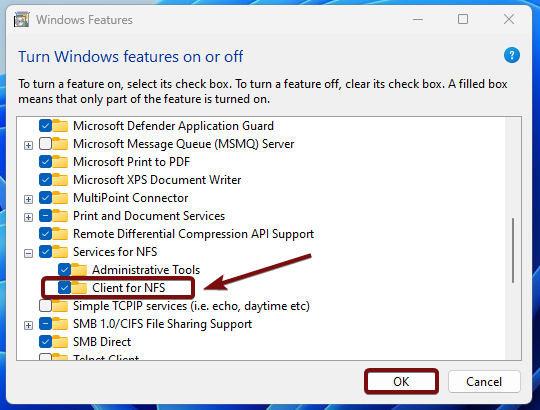
- You can find “Client for NFS” there. Click on the checkbox next it and click OK.
- Windows 11 will now eanble Client for NFS optional Feature.
Table of contents
Role of Client for NFS in Windows 11:
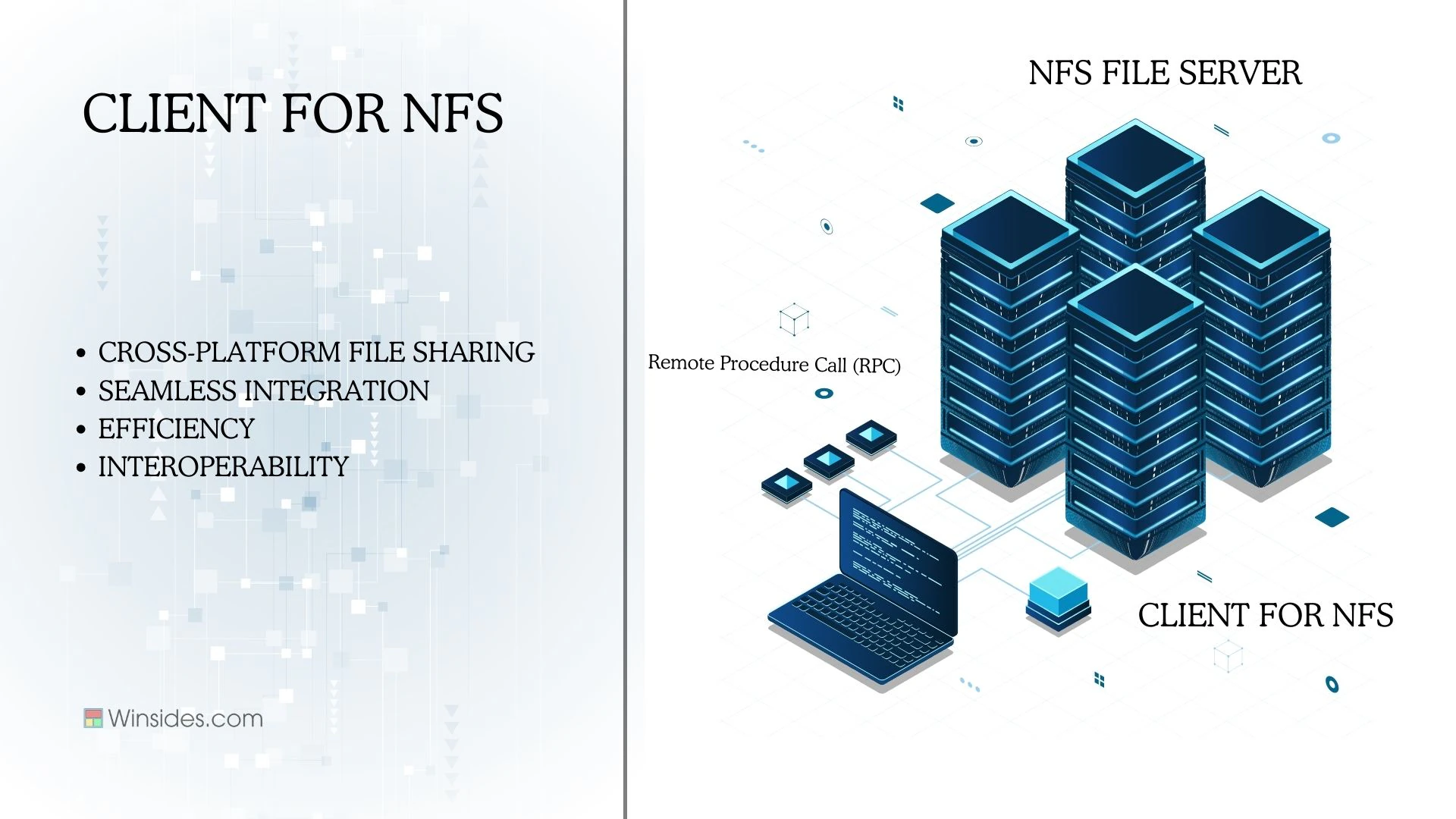
While NFS is a common feature in Unix and Linux systems, Windows systems traditionally use different file-sharing protocols, such as SMB (Server Message Block). However, in environments that use both Windows and Unix/Linux systems, Windows users often need to access NFS shares. This is where the Client for NFS comes into play. It is a feature in Windows 11 that allows a Windows system to connect to and access files on an NFS server.
How does NFS Share work?
NFS shares work by creating a transparent and smooth way for computers to share and access files over a network, using a server-client architecture model. By mounting a remote directory onto their local file system, clients can interact with files stored on the NFS server as if they were local, allowing for efficient file sharing and collaboration in networked environments.
Information on the Go!
Client for NFS Feature is not availble in the Home Edition as Microsoft typically reserves certain advanced features for the Professional, Enterprise, and Education editions.
Turn on Client for NFS optional feature in Windows 11:
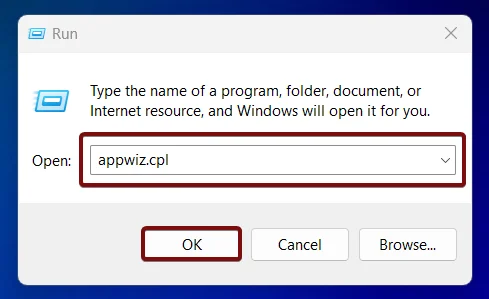
- The first step of this process is to open Run Command and execute the following command.
appwiz.cpl
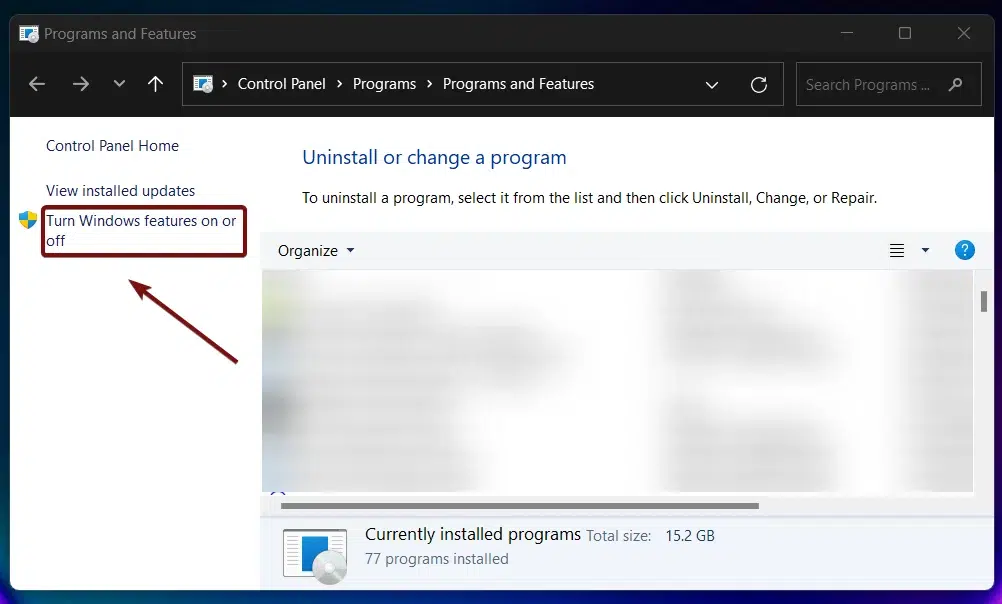
- Programs and Features windows will open now. You can find Windows Features on or off in the left pane.
- The Windows Features Dialog box will pop up now. From the list of services available, locate the Services for NFS and click on the plus sign next to it to expand the node.
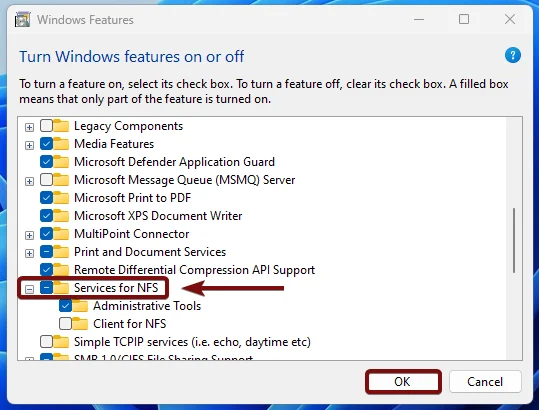
- You can now find the Client for NFS feature there. Click on the checkbox next to it and click OK.
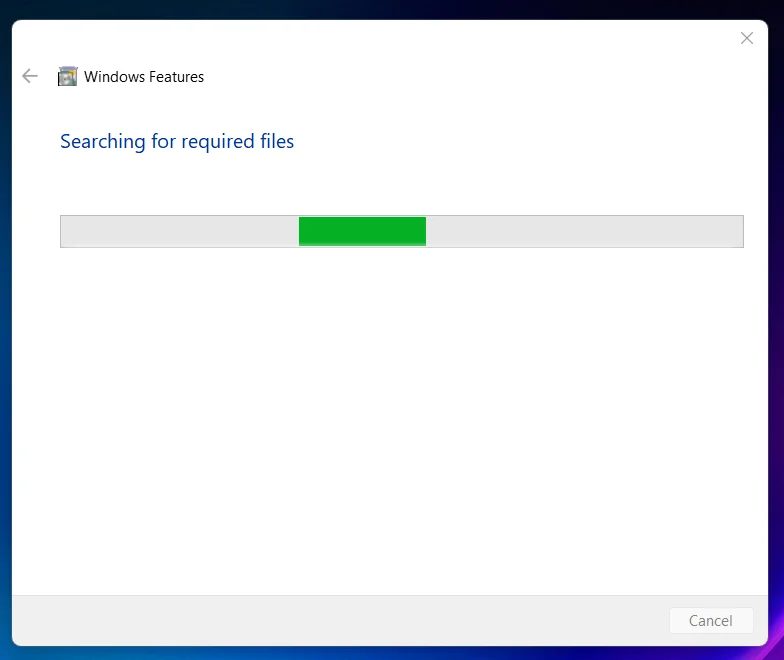
- Windows will search for the required files.
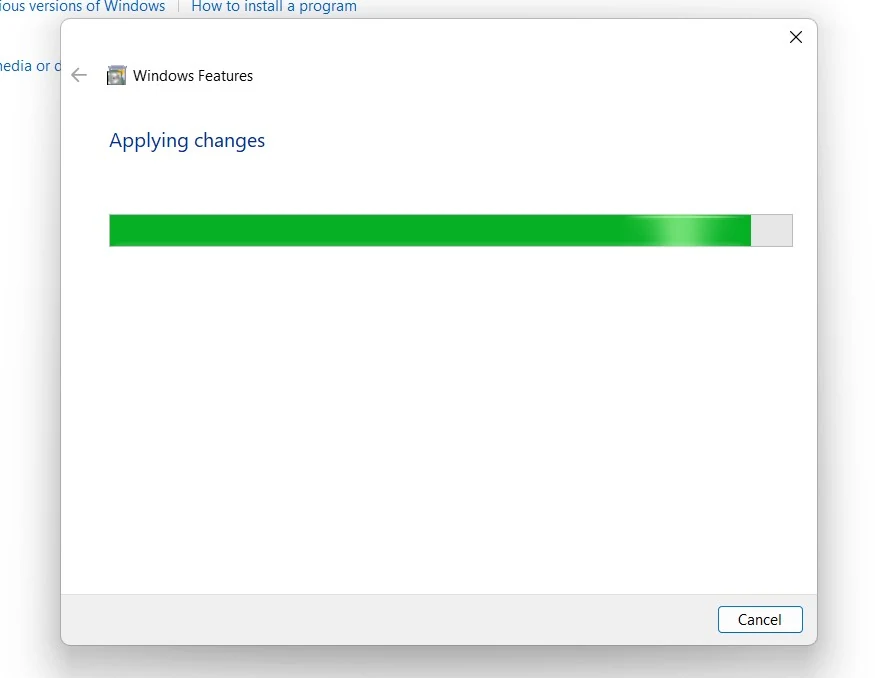
- After that, the Windows system will apply the necessary changes.
- Click Restart if you are prompted to restart or click Close accordingly. However, it is suggested that the changes be restarted right away so that they will be reflected.
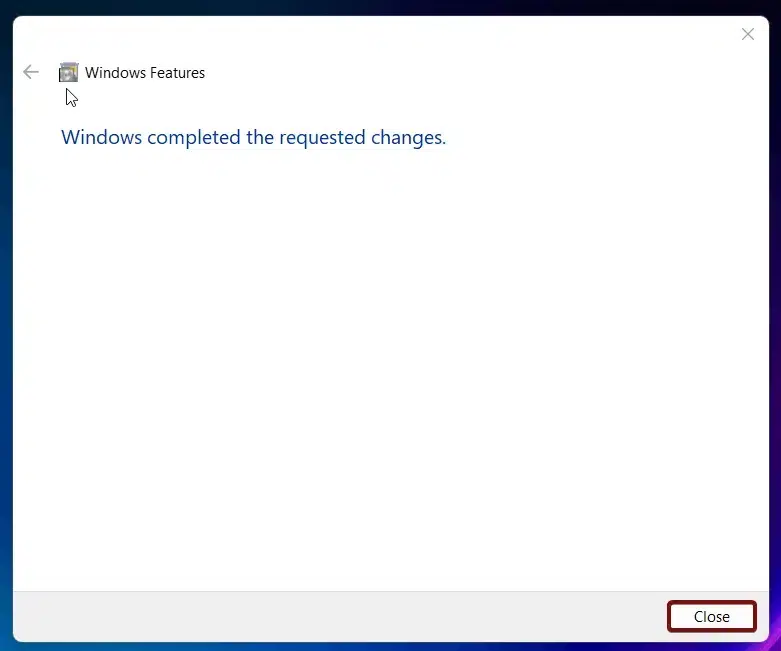
- That is it. Client for NFS Feature is now enabled in your Windows 11 Professional Edition.
By supporting NFS versions 2 and 3, the Client for NFS in Windows 11 ensures compatibility with a wide range of NFS servers and include security features like Kerberos authentication and encrypted communication.
Frequently Asked Questions
Does every version of Windows 11 support the NFS Client?
The Client for NFS is natively available in Windows 11 Pro, Enterprise, and Education editions. If you are running Windows 11 Home, the feature is not included in the “Windows Features” list.
How do I verify the NFS service is actually running?
If the mount command fails with a “network path not found” error despite the server being online, check the status of the service. In PowerShell, run:Get-Service nfsclnt
If the status is “Stopped,” you can kickstart it with Start-Service nfsclnt
Are there any security risks with enabling NFS?
NFS (specifically older versions like v2 or v3) does not have the robust built-in encryption that modern SMB versions provide. It relies heavily on IP-based authentication. If you are enabling this on a laptop that connects to public Wi-Fi, ensure your firewall is configured to block NFS ports (2049) on public profiles, or only enable the client when you are on a trusted local network.
Should I use NFS instead of SMB if I have a choice?
It depends on your environment. If you are primarily accessing files from a Linux-based NAS or a web server, NFS can offer better performance and lower overhead for small file operations. However, if your environment is entirely Windows-based, SMB (Server Message Block) is generally easier to manage regarding permissions and security integration.
Take away:
In summary, NFS shares are a key component of file sharing in Unix and Linux systems, and the Client for NFS in Windows 11 enables Windows users for seamless access. This feature is particularly valuable in mixed OS environments, where it fosters better collaboration and efficiency by allowing Windows systems to work smoothly with Unix/Linux servers.
Have Queries?
We hope you are satisfied with our article, and if you have any queries, kindly let us know in the comments. For more interesting articles, stay updated with winsides.com. Happy Computing! Peace out!






Thank you for contacting winsides.com.
As mentioned in the article, this Windows Feature is available only on Windows 11 Professional Editions such as Pro, Enterprise, and Education.
Steps to Upgrade to Windows 11 Pro and Enable Services for NFS: 1. Open Settings - Press `Windows + I` to open the Settings app. 2. Go to Activation Settings - In the left sidebar, select System. - Scroll down and click on Activation. 3. Upgrade to Windows 11 Pro - In the Activation menu, you'll see an option to upgrade to **Windows 11 Pro**. - Click on the **Go to the Store** button to purchase and install the upgrade. 4. Install the Services for NFS - Once you've upgraded, you can enable "Services for NFS" by following these steps: - Go to Control Panel > Programs and Features > Turn Windows features on or off - Scroll down to find Services for NFS and check the box to install it. If you have any queries, kindly let us know. Thank you Vigneshwaran Vijayakumar WinSides.com, RedditUnfortunately, it is not available in Windows 11 Home Edition, irrespective of the Version and Build. These features, like NFS, are targeted at professional environments where robust network file sharing is essential. For NFS functionality, you can either upgrade to Windows 11 Pro or use third-party NFS clients.