

Network File System (NFS) is a distributed file system protocol that allows users to access files over a network as if they were on their local storage. Originating from the UNIX world, NFS facilitates effective file sharing between systems, making it an essential tool for networked environments, especially in mixed-OS settings. It allows Windows 11 systems to interact with NFS shares provided by Unix or Linux Servers. Windows 11 can act as both an NFS client (accessing NFS shares) and an NFS server (hosting NFS shares). This article will explain how to enable services for NFS (Administrative tools) in Windows 11. Check out: Enable WSL 2 in Windows 11
Table of contents
Key Steps:
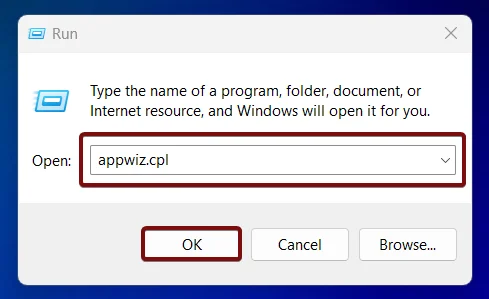
- Open Run Command and enter the followin command.
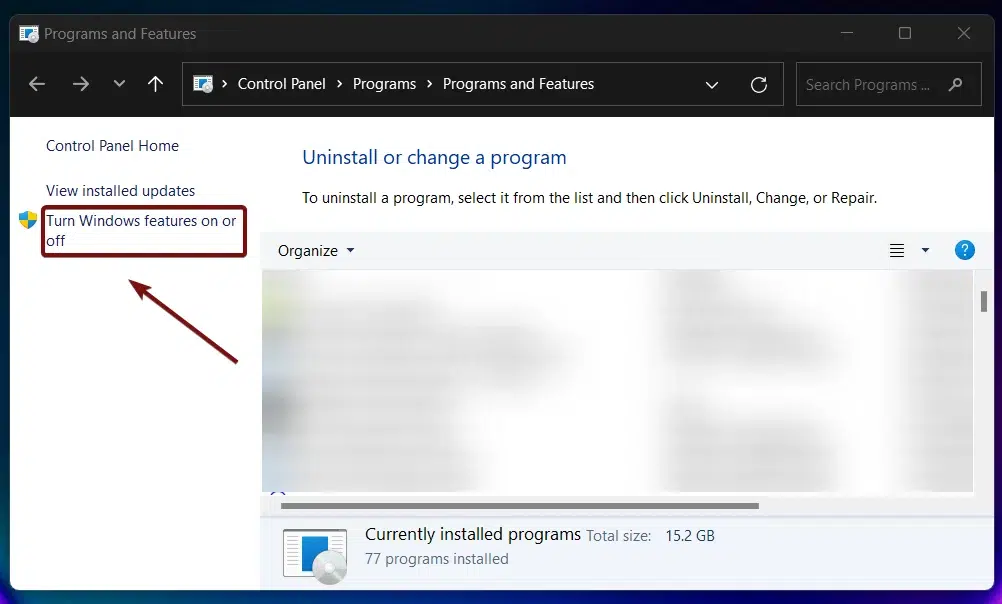
appwiz.cpl- Click on Turn Windows Features on or off.
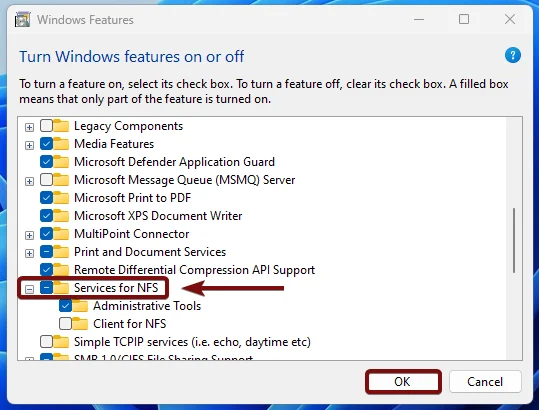
- Locate Services for NFS and Enable it.
What is an NFS Share?
An NFS share is a directory or a folder on a server that has been configured to be accessible over a network using the NFS protocol. NFS was developed by Sun Microsystems and has become a standard protocol for file sharing in UNIX and Linux environments. The protocol allows a system to share directories and files with others over a network, enabling users to access and manage files as if they were on their local machines.
This feature is limited to the Professional, Enterprise, and Education editions of Windows 11.
Turn on Services for NFS in Windows 11 – Simple Steps:
- Open Run Command and execute the following command.
appwiz.cpl
- From the left pane, click on Turn Windows Features on or off.
- Locate the Services for NFS and click on the checkbox next to it. Finally, click OK.
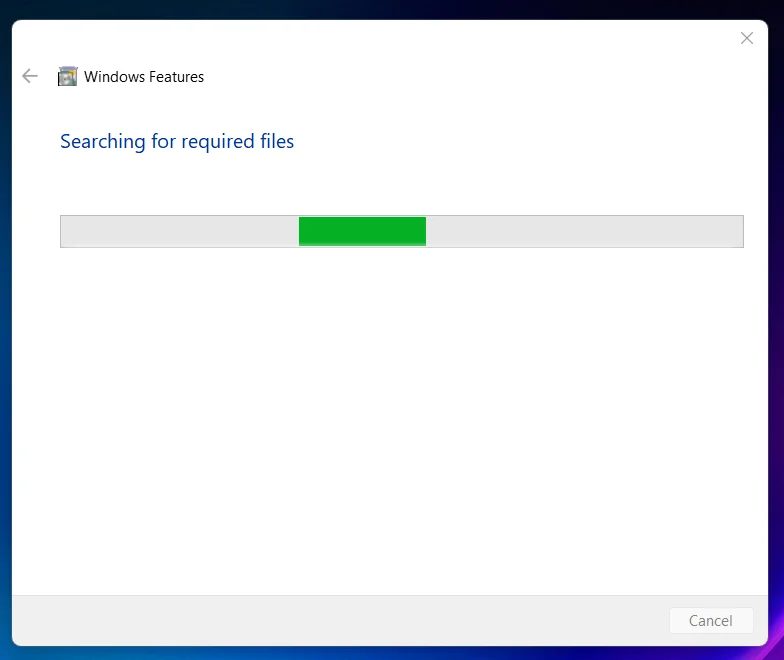
- Windows will search for the required files.
- Then, the necessary changes will be applied.
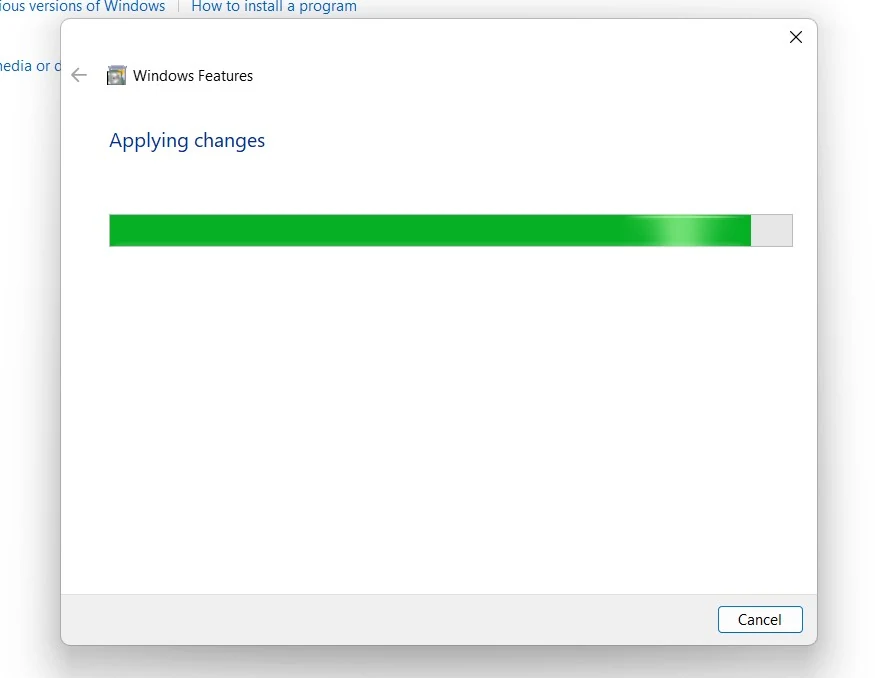
- Click Restart if you are prompted to restart or click Close accordingly. However, it is suggested that the changes be restarted right away so that they will be reflected.
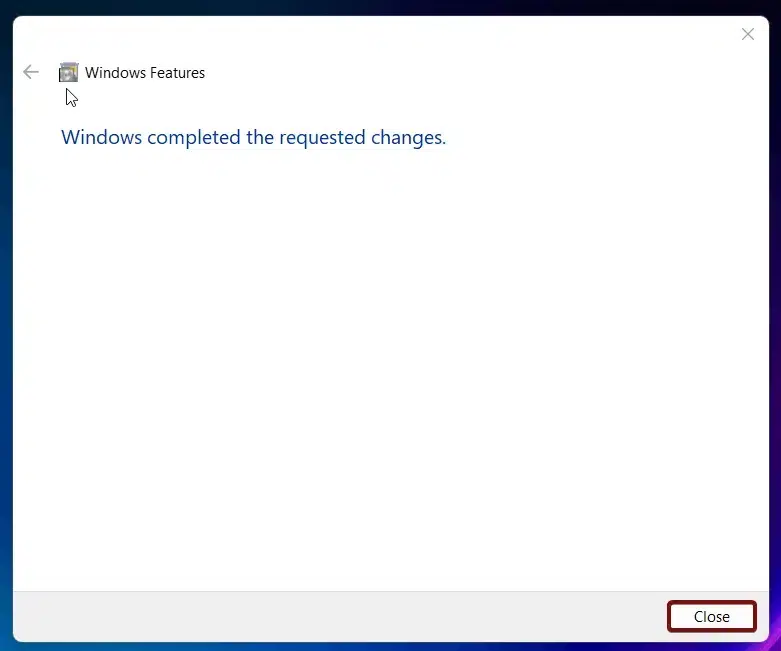
- This process will enable Services for NFS particularly Administrative Tools of NFS in Windows 11.
NFS Services offers security features such as Kerberos authentication to ensure secure file access.
Video Walkthrough for How to Enable Services for NFS on Windows 11
Services for NFS availability on various Windows Editions
| Windows Editions | Availability |
| Windows 11 Home | No |
| Windows 11 Professional | Yes |
| Windows 11 Education | Yes |
| Windows 11 Enterprise | Yes |
| Windows 11 Pro Education | Yes |
| Windows 11 SE | No |
| Windows 11 IoT Enterprise | Yes |
How does NFS Share work?
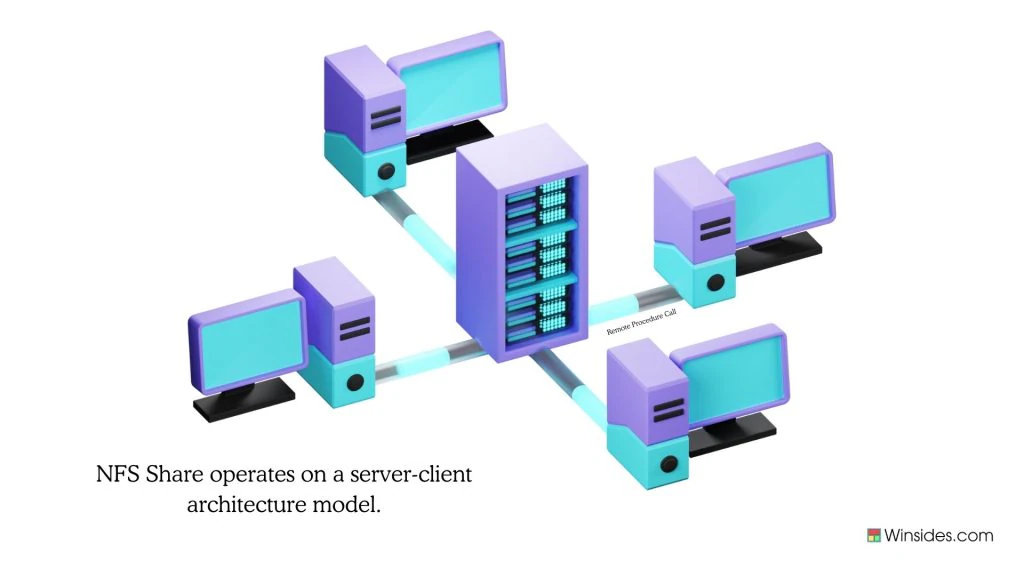
NFS operates on a server-client architecture model, and the process of connecting to an NFS share from a client system is known as mounting. Once mounted, the shared directory appears as a local directory on the client system, allowing users to interact with it using standard file operations. It uses RPC (Remote Procedure Call) to facilitate communication between the client and server. The protocol supports various versions, with NFSv4 being the latest version.
Frequently Asked Questions
How do I mount an NFS share once the service is enabled?
Once the client is active, you can map a network drive using the Command Prompt or PowerShell. The syntax is: mount -o anon \\hostname_or_ip\sharename Z:
Why am I getting “Access Denied” even though the service is running?
This is the most common hurdle. NFS relies on UID (User ID) and GID (Group ID) for permissions, which Windows doesn’t use natively. By default, Windows attempts to access the share as an anonymous user with a UID/GID of -2.
To fix this, you often need to edit the Windows Registry to match the UID and GID of the Linux server.
Can Windows 11 act as an NFS Server?
Standard Windows 11 only includes the Client for NFS. This means you can view files on other NFS systems, but you cannot host an NFS share for others to see. To host an NFS share from a Windows machine, you would typically need Windows Server or third-party software.
Take away:
By enabling NFS Services in Windows 11 professional editions, you can easily access and share files in mixed OS environments like Windows and Unix/Linux environments securely and efficiently. For more interesting articles, visit our Homepage. Safe File Sharing! Peace out!





Community
Comments (0)