
Skip to content
Winsides.com

Windows Insides

Winsides.com

Windows Insides

  • Windows 11
  • Windows Features
  • Windows Security
  • Microsoft
    • Microsoft Copilot
    • Microsoft Powertoys
  • Shortcuts
    • Windows Shortcuts
    • Desktop Shortcuts
  • Video Tutorials
  • About
    • What’s New?!
    • About us
    • Contact us
    • Privacy Policy
    • Terms of Use
  • Follow us
    • Reddit
    • Dev.to
    • YouTube
    • Linked In
    • X
    • Tumblr
    • Facebook
    • Instagram
    • Buy Me A Coffee
  • Windows 11
  • Windows Features
  • Windows Security
  • Microsoft
    • Microsoft Copilot
    • Microsoft Powertoys
  • Shortcuts
    • Windows Shortcuts
    • Desktop Shortcuts
  • Video Tutorials
  • About
    • What’s New?!
    • About us
    • Contact us
    • Privacy Policy
    • Terms of Use
  • Follow us
    • Reddit
    • Dev.to
    • YouTube
    • Linked In
    • X
    • Tumblr
    • Facebook
    • Instagram
    • Buy Me A Coffee
Close

Search

Winsides.com

Windows Insides

Winsides.com

Windows Insides

  • Windows 11
  • Windows Features
  • Windows Security
  • Microsoft
    • Microsoft Copilot
    • Microsoft Powertoys
  • Shortcuts
    • Windows Shortcuts
    • Desktop Shortcuts
  • Video Tutorials
  • About
    • What’s New?!
    • About us
    • Contact us
    • Privacy Policy
    • Terms of Use
  • Follow us
    • Reddit
    • Dev.to
    • YouTube
    • Linked In
    • X
    • Tumblr
    • Facebook
    • Instagram
    • Buy Me A Coffee
  • Windows 11
  • Windows Features
  • Windows Security
  • Microsoft
    • Microsoft Copilot
    • Microsoft Powertoys
  • Shortcuts
    • Windows Shortcuts
    • Desktop Shortcuts
  • Video Tutorials
  • About
    • What’s New?!
    • About us
    • Contact us
    • Privacy Policy
    • Terms of Use
  • Follow us
    • Reddit
    • Dev.to
    • YouTube
    • Linked In
    • X
    • Tumblr
    • Facebook
    • Instagram
    • Buy Me A Coffee
Close

Search

Home/Windows 11/How To?/Run System Information as Administrator on Windows 11: 5+ Easy Ways!

Run System Information as Administrator on Windows 11: 5+ Easy Ways!

Vigneshwaran Vijayakumar
By Vigneshwaran Vijayakumar
January 16, 2025 6 Min Read
0

System Information is a built-in tool in Windows 11 that provides detailed information about your computer’s hardware, software, and system resources. This is an essential tool for troubleshooting, diagnosing issues, and gathering data about your system’s configuration. For some cases, you may need to run System Information with administrative privileges to access advanced system details that require elevated permissions. Running it as an administrator ensures you can view and manage all necessary information without restrictions and so In this tutorial, I’ll guide you to run system information as administrator with elevated rights on your windows 11 pc.

Why to Run System Information with Administrative Privileges on Windows 11?
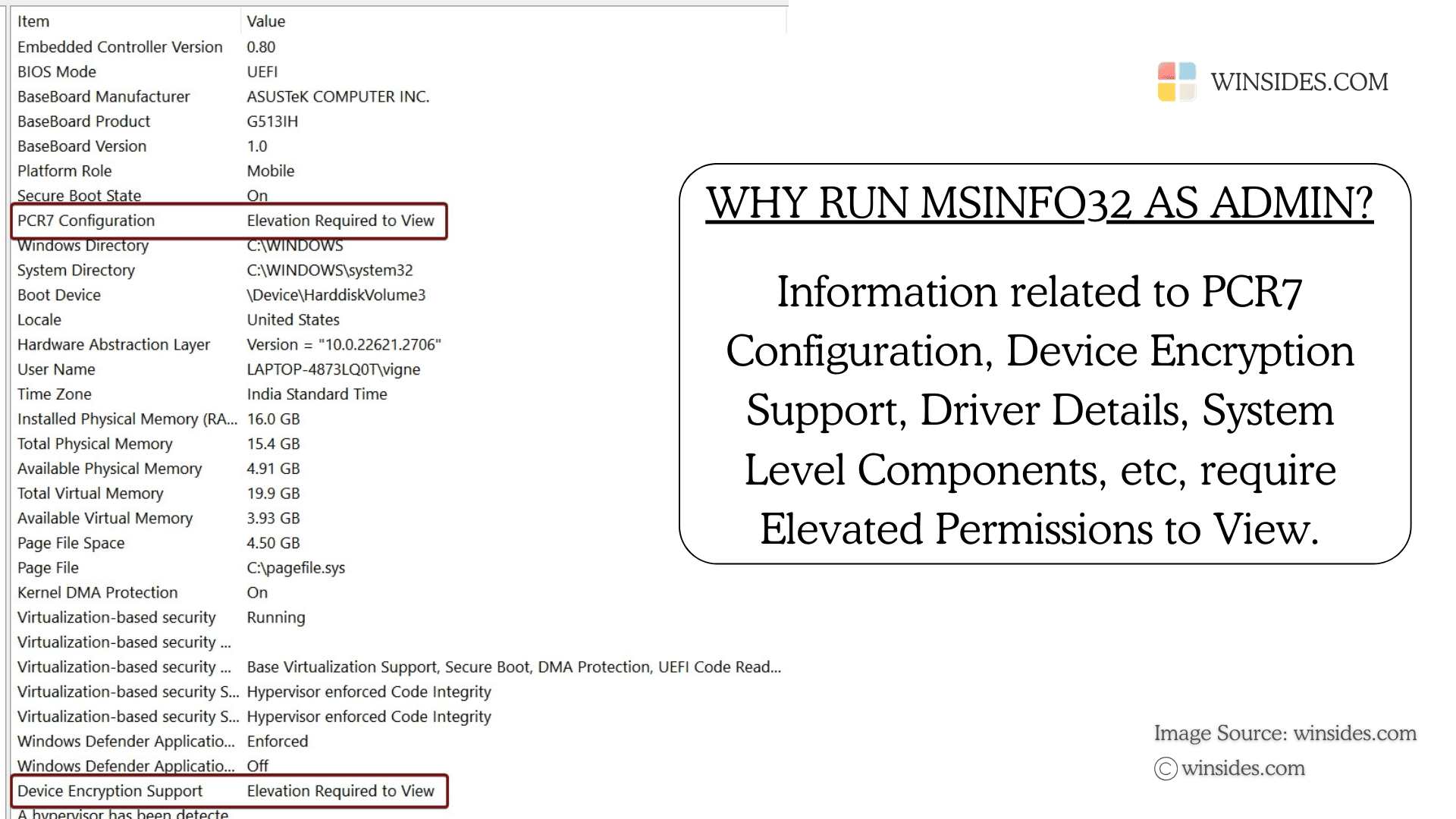
Why run msinfo32 as admin
Why run msinfo32 as admin?

The key reason to run System Information (msinfo32) as an administrator is to ensure real-time and accurate data, especially for system resources like drivers, PCR7 Configuration, Device Encryption Support, and other system-level components. This is important for avoiding discrepancies that could mislead troubleshooting or system monitoring tasks.

Different Methods to Open and Run System Information as Admin on Windows 11 OS

  1. Open System Information as Administrator using the Start menu.
  2. Use the Run Command and open System Information with Administrative Privileges.
  3. Create a New Task to run System Information with Administrative Privileges using the Task Manager.
  4. Always Open System Information with Elevated Permissions by creating a Dedicated Desktop Shortcut.
  5. How to Open System Information as Admin using the File Explorer.
  6. Open Command Prompt or Windows PowerShell as Administrator and then open msinfo32.

IMPORTANT: Running applications as an administrator grants elevated privileges that can significantly affect your system. Please use caution when doing so, as it can lead to Unintended System Modifications, Security Vulnerabilities, Accidental Data Loss, Unauthorized Access, Irreversible Changes, etc.

How to Run System Information as Administrator using the Start menu on Windows 11?

  • Go to the Start menu. You can also use the keyboard shortcut WinKey + S. Search for System Information.
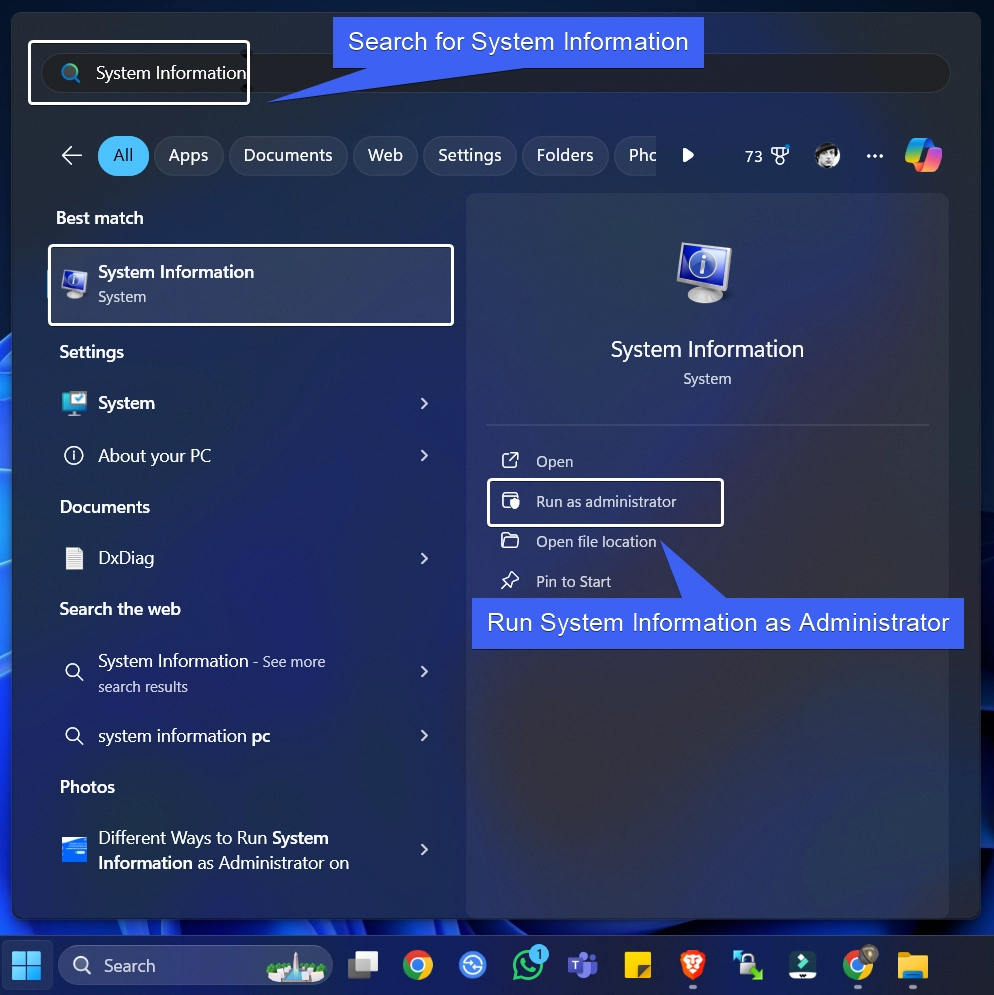
open System Information as Admin using the Start menu
  • Once you find the app, right-click on the app and click Run as Administrator.
  • The User Account Control will prompt for confirmation and open System Information as Administrator.
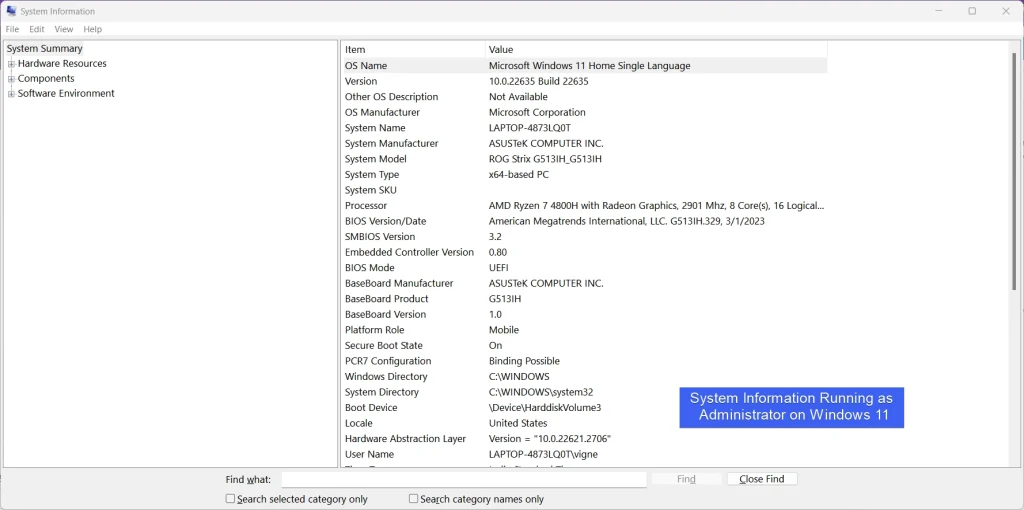
System Information Running as Admin on Windows 11

Use Run Command and open System Information with Administrative Privileges

  • Go to the Run Command. The easy way to access the Run Command is to use the Keyboard Shortcut, WinKey + R.
  • Type the command msinfo32 and press CTRL + SHIFT + ENTER. This will prompt the system to execute the command with Administrative Privileges.
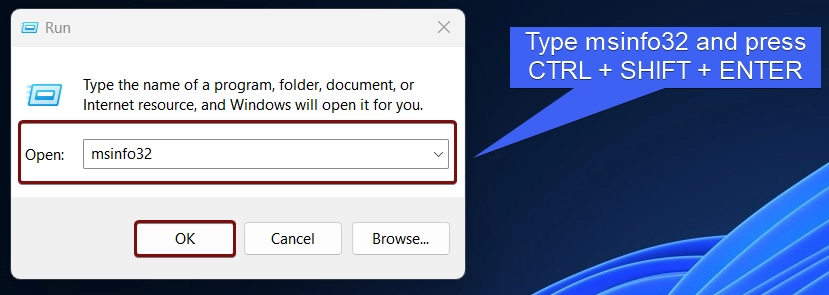
Type msinfo32 and press Ctrl + Shift + Enter
  • The system will confirm and open msinfo32 with Administrative Privileges.

Run New Task to open msinfo32 with Administrative Privileges using the Task Manager

  • Right-click on the Taskbar and click Task Manager. You can also use the shortcut CTRL + SHIFT + ESC. This combination will open Task Manager directly.
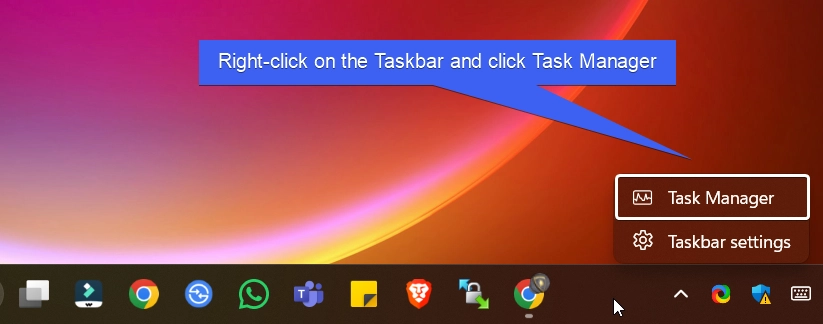
Right-click on the Taskbar and click Task Manager
  • In the Task Manager, under Processes, click on Run New Task. Create New Task dialog will pop up now.
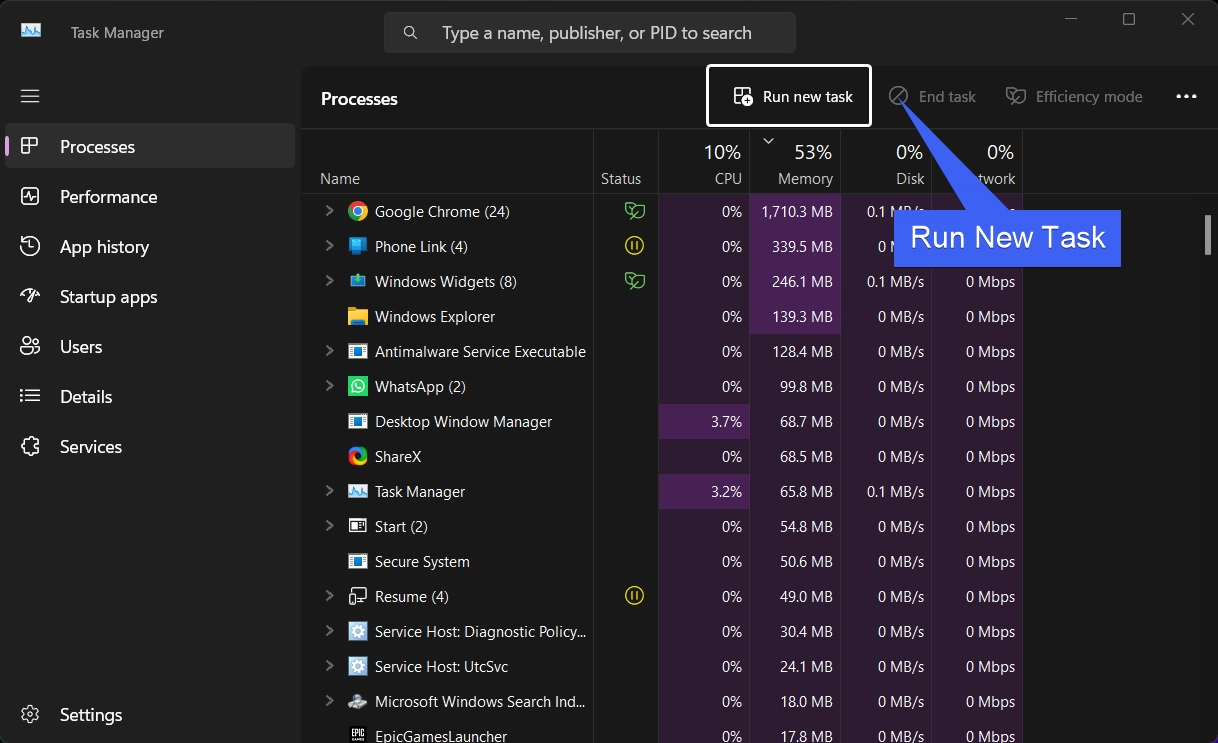
Run New Task
Run New Task
  • Type the command msinfo32 and enable the checkbox “Create this Task with Administrative Privileges“. Finally, click OK.
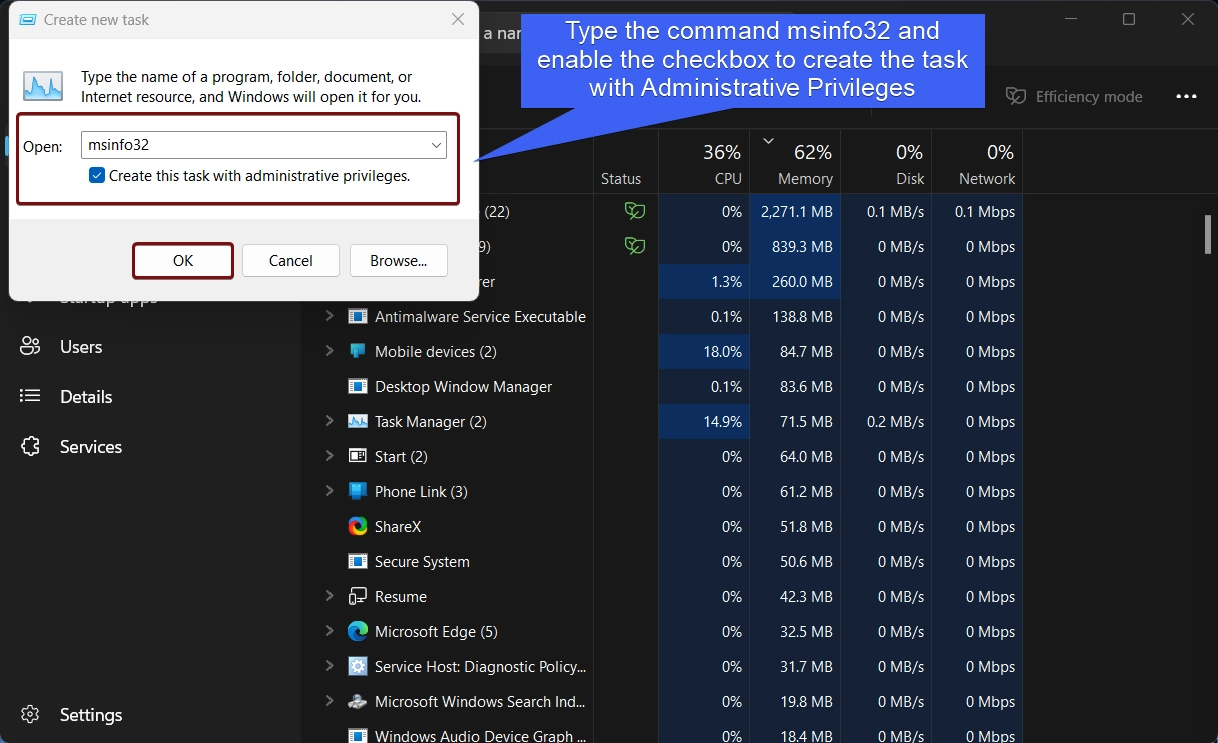
Enable the checkbox to create this task with administrative privileges

Create a Desktop Shortcut and Always Open System Information as Administrator on Windows 11

  • Right-click on the Empty space of the Desktop, and click New > Shortcut.
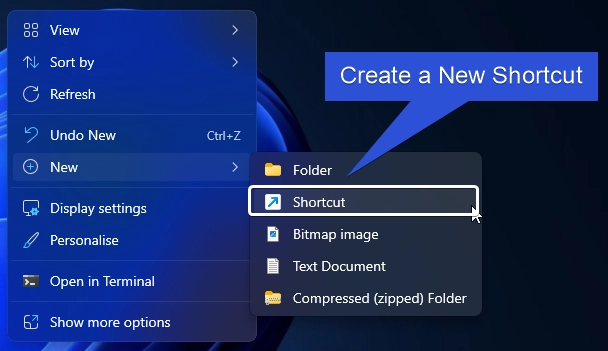
Create a new Shortcut
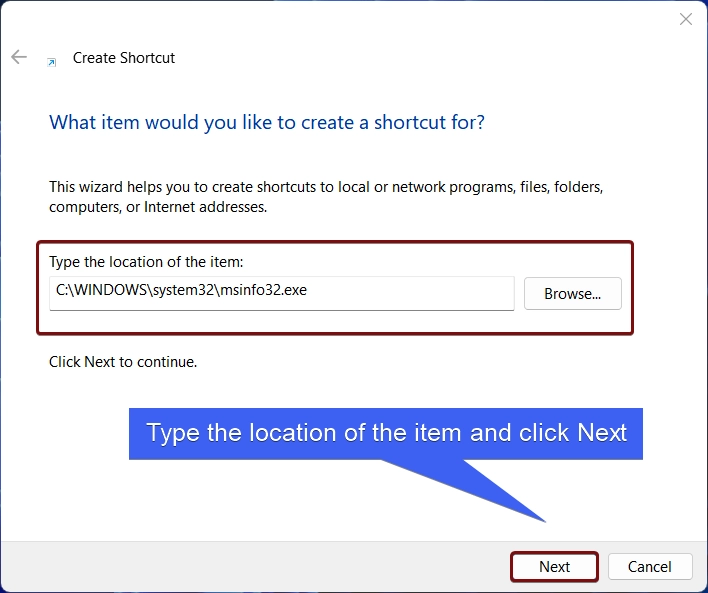
  • The Create Shortcut dialog box will open now. In “Type the Location of the Item“, enter the command C:\WINDOWS\system32\msinfo32.exe and click Next.
Type the location of the item and click Next
  • The system will assign the shortcut name msinfo32. Kindly change it to System Information. Finally, click Finish.
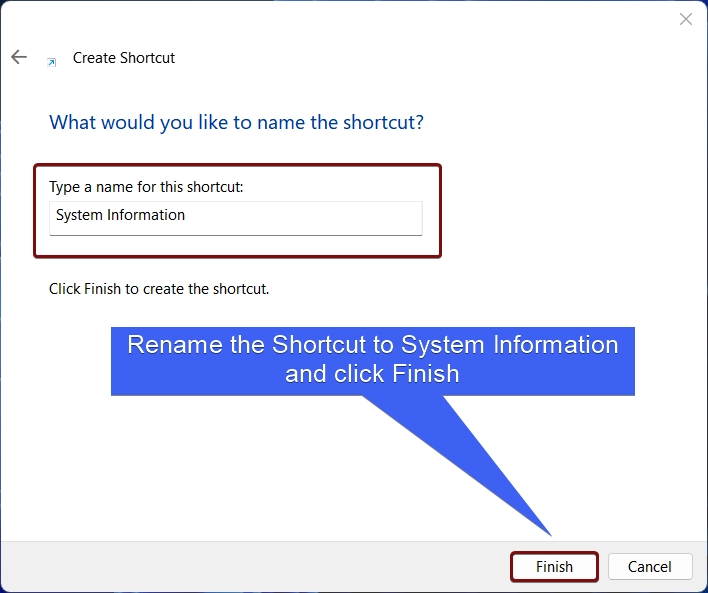
Rename the shortcut and click Finish
  • System Information Desktop Shortcut will be created.
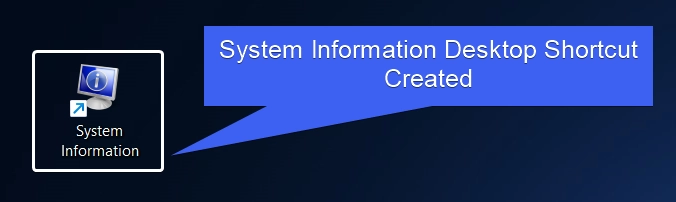
System Information Desktop Shortcut Created
  • Right-click on the Shortcut and click on Properties.
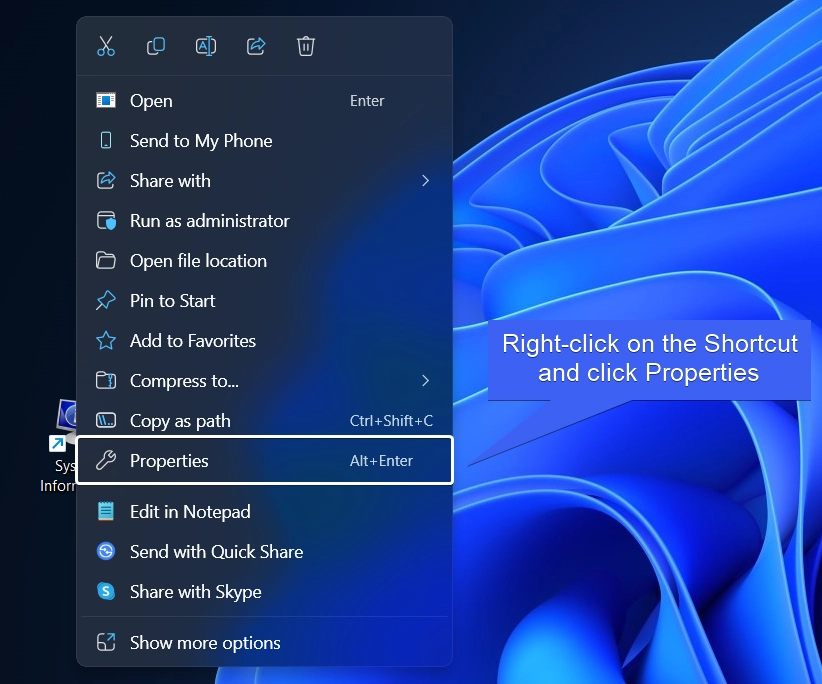
Right-click on the Shortcut and click Properties
  • System Information Properties will open now. Click Advanced.
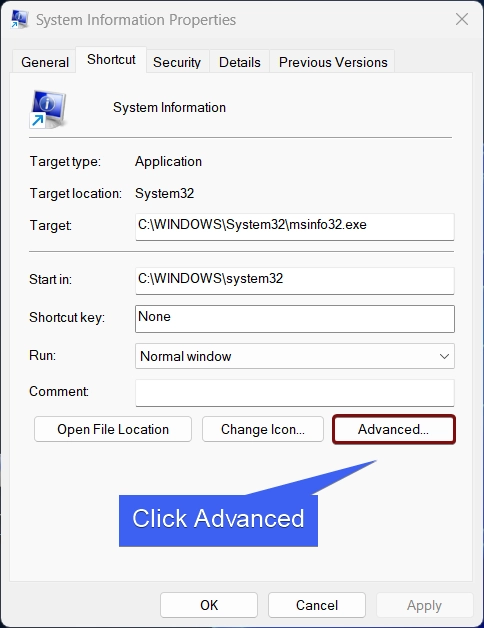
Click Advanced
Click Advanced
  • In Advanced Properties, make sure to enable the checkbox “Run as Administrator“. Finally, click OK, and then Apply.
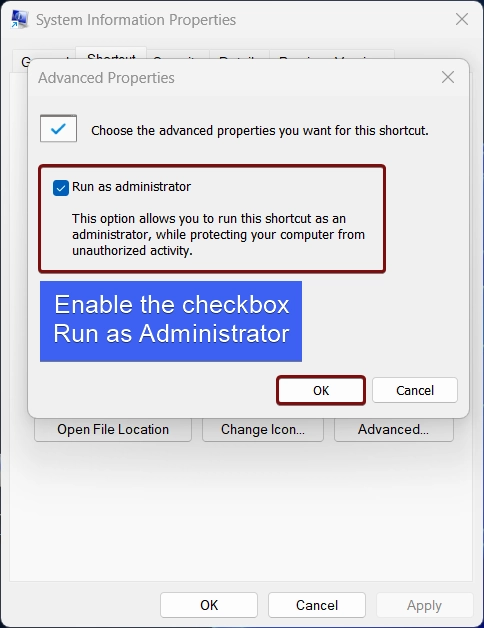
Enable the checkbox Run as Administrator
  • This option allows you to run this shortcut as an administrator, while protecting your computer from unathorized activity.
  • That’s it. Everytime you open System Information via this shortcut, the User Account Control will prompt for your confirmation and open it with Elevated Privileges.

Open System Information with Elevated Permissions using the File Explorer

  • Open File Explorer using the Shortcut WinKey + E.
  • In the File Explorer, enter the following path to access the System 32 Folder. C:\WINDOWS\system32
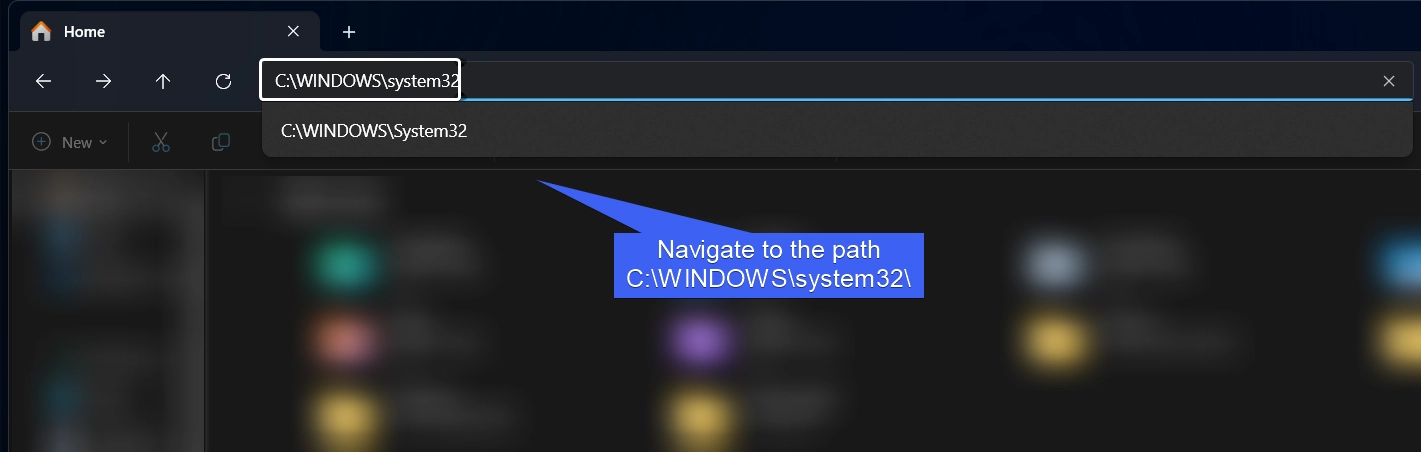
Navigate to the following path in the File Explorer
  • Once in the System32 Folder, go to the search bar and search for msinfo32.

Search for msinfo32
Search for msinfo32
  • Locate msinfo32, and right-click on the file and click “Run as Administrator“.
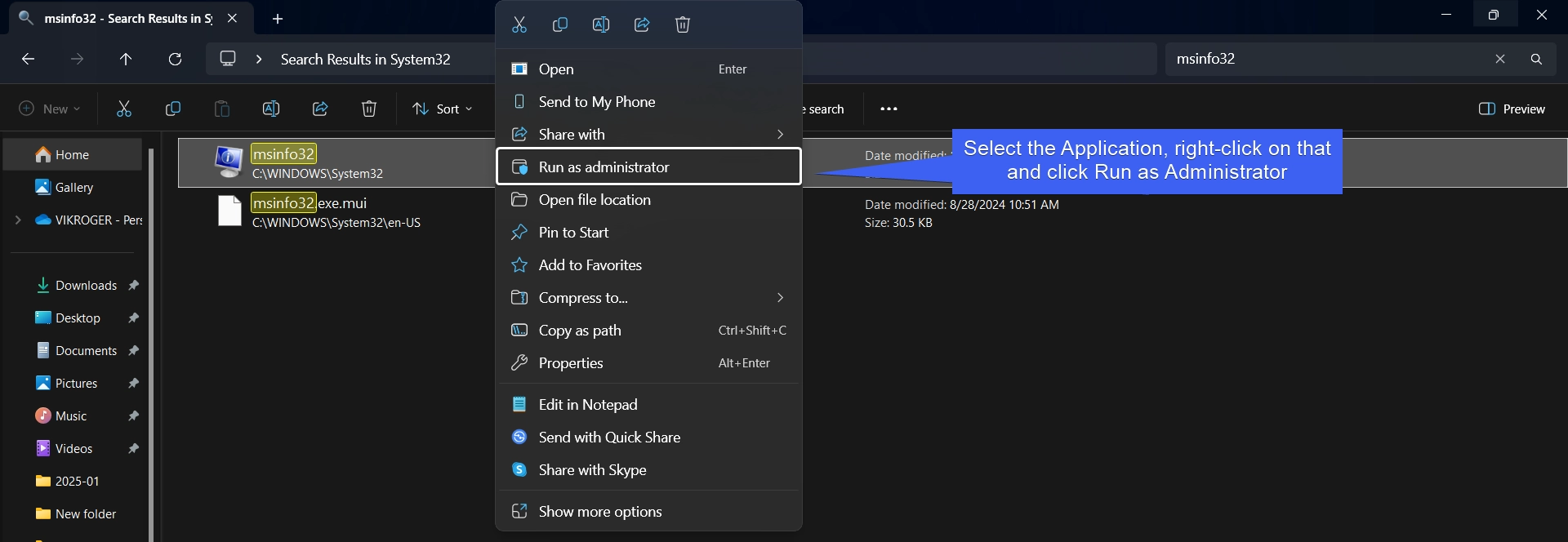
Right-click on the Application and click on Run as Administrator

Open Command Prompt or Windows PowerShell with Administrative Privileges and run Msinfo32

For explanation, we will use Windows PowerShell.

  • Open Run Command using the shortcut WinKey + R.
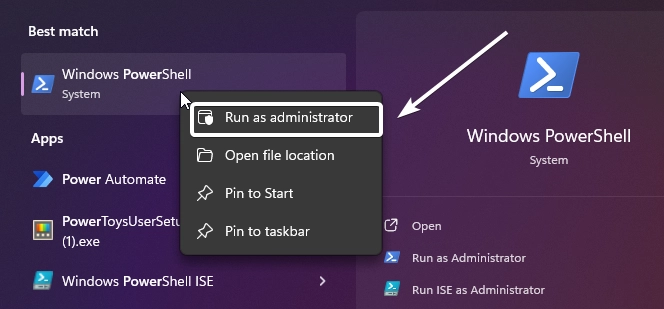
  • Type powershell (For Command Prompt, use the command cmd), and press CTRL + SHIFT + ENTER.
Run PowerShell as Administrator
  • This will prompt the system to execute this command with Administrative Privileges. In the PowerShell, execute the following command. msinfo32
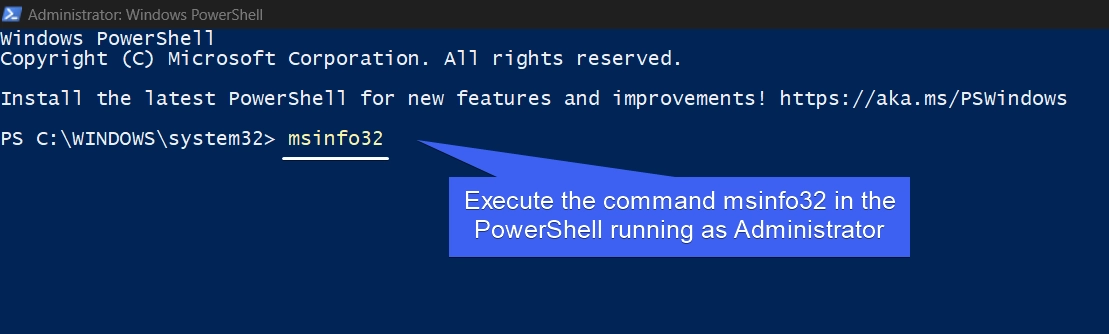
Execute the Command msinfo32 in the PowerShell

Always be Cautious while Running an Application as Administrator on Windows 11
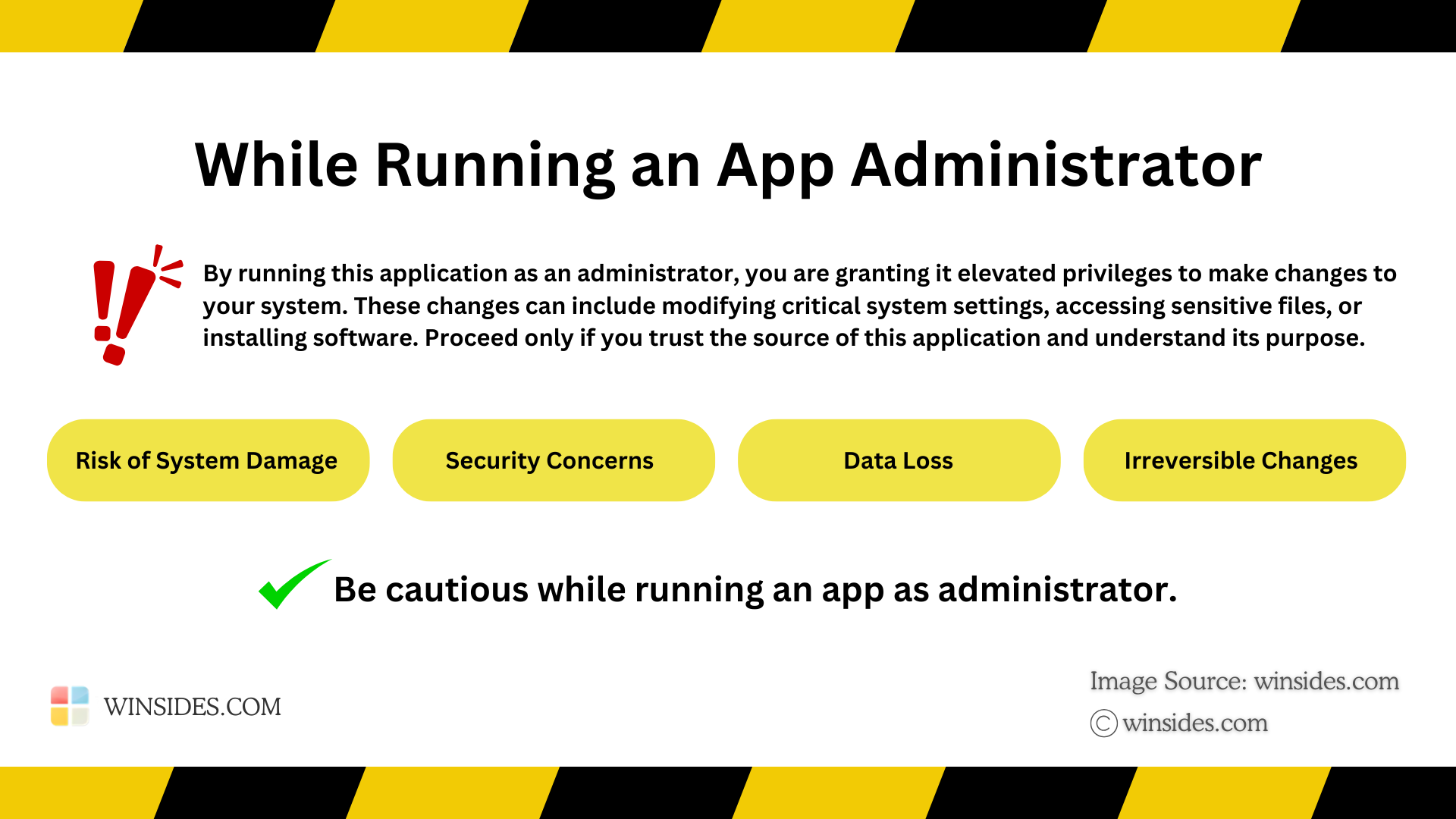
Be cautious while running an app as administrator

System Information as Administrator on Windows 11 grants it elevated privileges, which can potentially bypass system security restrictions. Please proceed with care and only run trusted applications in this mode. At Winsides.com, we advise our users to use Administrator privileges only when absolutely necessary to perform tasks requiring elevated rights. Misuse of administrative privileges may lead to System Vulnerabilities, Data Loss, System Instability, Security Concerns, Irreversible Changes, etc.

Have Queries?

If you have any queries, or if you find difficulty following the above steps, kindly let us know in the Comment Section. For more interesting articles, stay tuned to Winsides.com. Happy Computing! Peace out!


Tags:

Run Application as AdministratorRun As AdminRun as Administratorrunas
Vigneshwaran Vijayakumar
Author

Vigneshwaran Vijayakumar

Hello, I'm Vigneshwaran, the founder, owner, and author of WinSides.Com. With nearly a decade of experience in blogging across various domains and specializing in Windows-related tutorials for over five years, I bring a wealth of knowledge and expertise to WinSides.Com

Follow Me
Other Articles
How to Run Component Services as Administrator on Windows 11
Previous

5+ Ways- Run Component Services as Administrator on Windows 11!

How to Run Visual Studio as Administrator on Windows 11
Next

4+ Ways to Run Visual Studio as Administrator on Windows 11

No Comment! Be the first one.

Leave a Reply Cancel reply

Your email address will not be published. Required fields are marked *

  • How to Install and Run X Server in Windows 11?
  • How to Enable Client for NFS in Windows 11?
  • 5+ Easy Methods to Find/Search Video Files Only in Windows 11!
  • How to Enable TFTP Client in Windows 11?
  • Windows 10 officially ends on October 14, 2025
  1. Vigneshwaran Vijayakumar
    Vigneshwaran Vijayakumar on How to Enable Windows PowerShell 2.0 in Windows 11?October 5, 2025

    Hello Mr. Mohamad El-Kheir, Thank you for contacting us. Microsoft has removed PowerShell version 2.0 completely from Windows 11 24H2…

  2. Avatar of Mohamad El-Kheir
    Mohamad El-Kheir on How to Enable Windows PowerShell 2.0 in Windows 11?October 5, 2025

    i have a MSI laptop with windows 11 Home Installed on it. how to install powershell v2.0 on it

  3. Vigneshwaran Vijayakumar
    Vigneshwaran Vijayakumar on DxDiag Windows 11 – What is it & How to use it for Troubleshooting?August 14, 2025

    Hey Myla Shannon Thank you for your valuable feedback. We are delighted to hear your compliment and excited to know…

  4. Avatar of Myla Shannon
    Myla Shannon on DxDiag Windows 11 – What is it & How to use it for Troubleshooting?August 14, 2025

    This content is incredibly informative.

  5. Avatar of seven
    seven on How to Enable IIS [Internet Information Services] in Windows 11?July 29, 2025

    I found this post very helpful.

  • About us
  • What’s New?!
  • Guest Posts on Winsides.com – Terms and Conditions
  • Publication Sitemap
  • Careers
  • Authors
  • Why Trust Winsides.com?
  • Content Removal Request
  • Terms of Use
  • Disclaimer
  • Contact us
Copyright 2024-2026 - Winsides.com. All rights reserved.